

OSDn (Local Distribution Network) Model: Innovative Energy Management in the Warehouse Industry – Benefits for Owners, Investors and Tenants of Logistics Parks
A Distribution System Operator, known by the acronym DSO, is a specialized form of electricity distribution management in closed, local networks that are not directly connected to the main transmission grid. In practice, this means that the DSO operates as an independent entity responsible for operating energy infrastructure in limited areas, such as industrial parks, logistics centers, or warehouse facilities.
Its role includes coordinating energy supply, ensuring grid stability, and facilitating the integration of modern solutions, such as renewable energy sources. Unlike larger operators, the DSO focuses on the specific needs of the closed system, allowing for more flexible energy management tailored to local conditions.
This solution fits into the broader context of the energy transition, where the emphasis is on efficiency and sustainability, enabling commercial entities to treat energy not only as a cost but also as a potential source of added value. In the warehouse industry, where logistics parks are key elements of global supply chains, implementing the DSO model offers numerous benefits, transforming traditional energy infrastructure into an active revenue-generating tool and increasing facility competitiveness. Owners of such properties can derive stable income from leasing the power grid to a licensed operator, providing a predictable financial stream for up to ten years, without the need for additional capital expenditures for expansion or modernization. Such a lease not only frees up capital for other purposes but also increases the overall value of the property, making it more attractive to investors seeking assets with high return potential.
Tenants of warehouse parks benefit from this solution by being able to independently choose their energy supplier, known as the TPA principle, which allows them to negotiate more favorable tariff terms and tailor contracts to their individual operational needs. Additionally, this model facilitates contracts for the purchase of green energy directly from producers, supporting sustainable development goals and helping to meet the environmental, social, and governance standards increasingly required by large market players, such as international logistics corporations. As a result, warehouse parks utilizing the DSO model become more desirable. This translates into longer lease terms, lower tenant turnover, and higher rental rates, ultimately strengthening the landlord’s position in the commercial real estate market.
Reducing financial risk is another aspect when the DSO takes over responsibility from the facility owner for settlements, payments and debt collection from tenants.
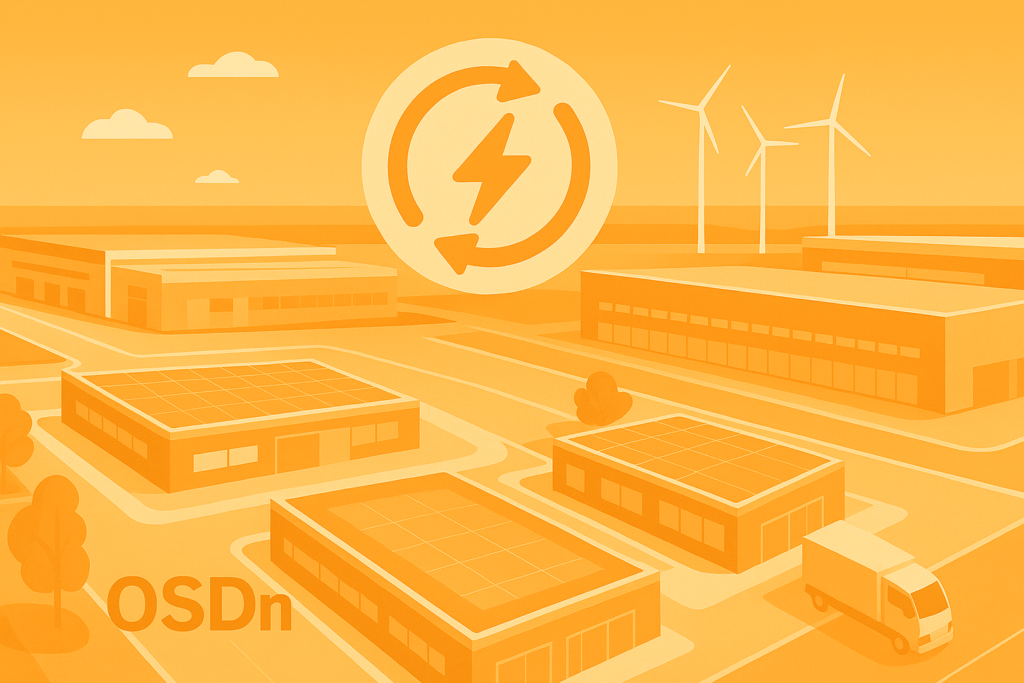
Thanks to the DSO model, integrating renewable energy sources, such as photovoltaic panels installed on warehouse roofs, enables the sale of generated green energy to tenants, increasing property owner profits and ensuring a faster return on investment while simultaneously improving the environmental footprint.
For investors in the logistics sector, the DSO model means treating energy infrastructure as a strategic asset that supports long-term portfolio value growth, particularly in the context of the growing demand for “green” facilities, where energy efficiency is becoming a key decision-making factor in location selection by companies focused on sustainable development. As a result, implementing this model not only optimizes the daily operations of warehouse parks and enables the flexible addition of consumption points, which is crucial for growing logistics parks, but also positions them as leaders in the energy transition, attracting investment funds interested in low-risk assets with high environmental potential.
ESG in the Context of DSO Applications The DSO model fits perfectly within the ESG framework, where E – Environmental refers to the reduction of CO2 emissions through the integration of renewable energy sources and distribution optimization, which minimizes environmental impact. S – Social Responsibility (SR) emphasizes benefits for the community, including ensuring a stable energy supply for tenants and supporting local environmental initiatives, which builds a positive company image. G – Corporate Governance (GSR) encompasses transparent management of the energy network in accordance with regulations, ensuring legal compliance and business ethics, increasing investor confidence.
To better illustrate the practical aspects of DSO in the warehouse industry, we must consider potential application scenarios. In a typical logistics park covering tens of thousands of square meters, where energy consumption is high due to lighting, ventilation systems, and automation, DSO enables the creation of a microgrid in which energy from local sources powers the common areas of the property or is sold to tenants. Investors can thus diversify their revenue streams (NOI) by combining traditional leases with additional revenue from energy management, which in the long term increases the asset’s capitalization. For the fiercely competitive commercial real estate sector, this approach is becoming a strategic advantage, particularly in Poland, where the development of warehouse parks is driven by e-commerce and international trade.
The table below presents examples of estimated DSO impacts on key indicators in a medium-sized warehouse park, based on general industry analyses:
| Indicator | without DSO | with DSO | Estimated Improvement |
| Annual energy costs | High, dependent on external tariffs | Reduced thanks to the sale of green energy | Up to 20-30% in savings |
| Property value | Standard, no ESG premium | Elevated thanks to a balanced profile | Growth ~10-15% |
| Tenant turnover | High, due to lack of flexibility | Low, due to satisfaction with energy services | Reduction ~15-25% |
| Additional income | n/a | From leasing the network and selling green energy to tenants | Stable for 10 years, around PLN 100,000-200,000 per year, with a faster return on investment |
| CO2 emissions | High | Reduced via green energy | Reduction ~20-40% |
In the context of broader trends, DSO supports the development of “green warehouses,” where energy becomes an integral part of the business strategy. In logistics parks, integration with energy storage allows for the storage of surplus photovoltaic energy, which stabilizes supply and maximizes revenue from energy sales.
For owners, this translates not only into financial benefits but also reputational benefits, as facilities compliant with ESG principles attract tenants and facilitate access to financing for green projects.
In Poland, where the logistics sector is growing rapidly, the DSO model is becoming a tool for adapting to changing environmental regulations, ensuring competitiveness in the European market.
In summary, DSO represents a modern approach to energy management in the warehouse industry, where the benefits of its implementation include not only direct revenues and savings but also a strategic position in the commercial real estate market. For logistics park owners, investors, and tenants, this solution opens up new opportunities, making energy infrastructure a key element of business success. More information about implementations and potential analyses can be found at www.plusenergia.pl.
